Transforming complex rowing telemetry into actionable performance insights
End-to-end product design for a dual-sided analytics platform used by USRowing. Translated hardware telemetry into a scalable design system and intuitive dashboard for elite athletes and coaches.
Client
XBoat
Year
2024-2025
Scope
Challenge
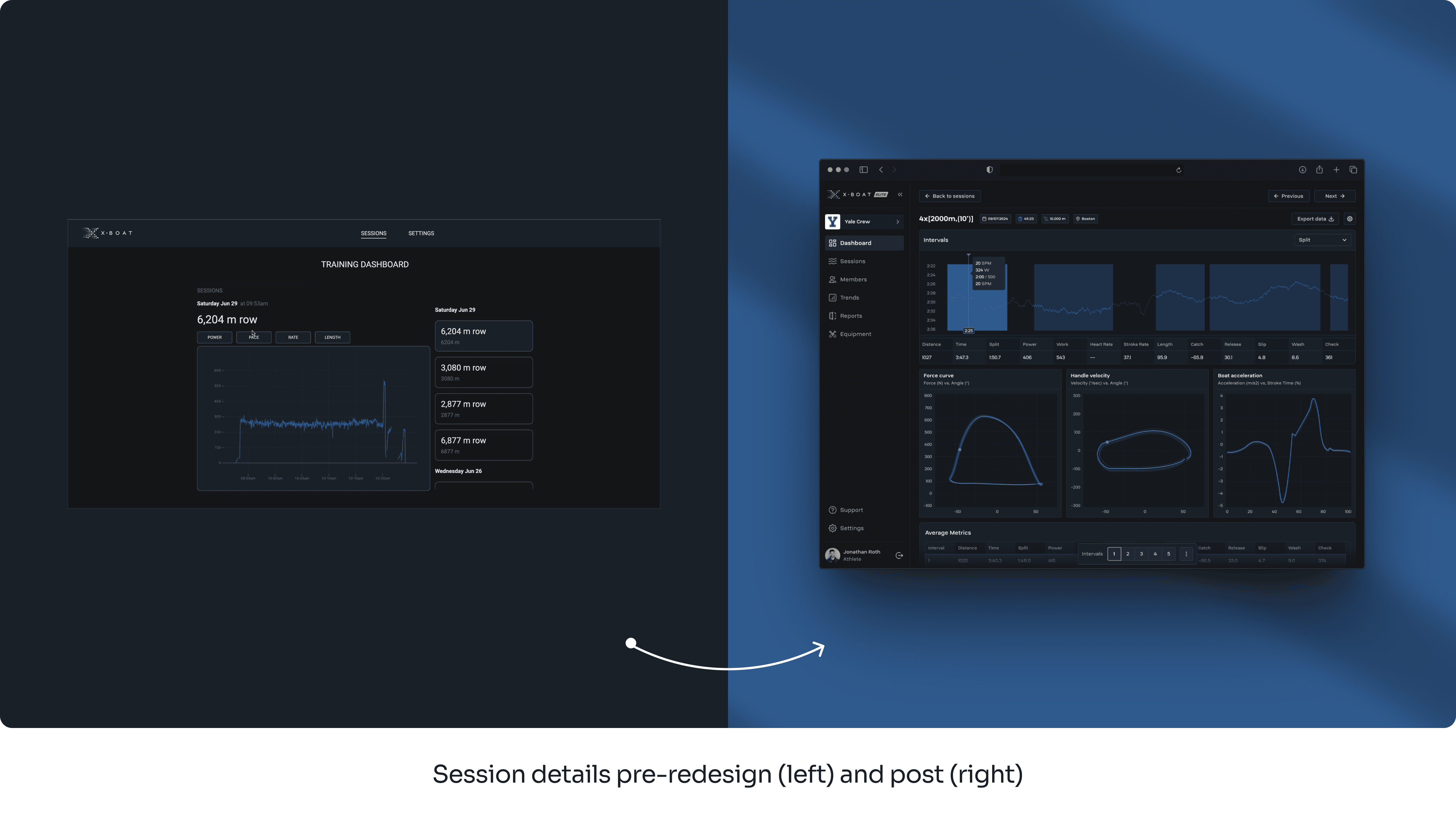
XBoat possessed powerful hardware capturing stroke-by-stroke metrics, but the existing MVP failed to make that data usable. The interface suffered from poor information architecture, making it impossible for coaches to manage large rosters or for athletes to spot trends.
The core challenge: how do we visualize high-frequency data (power, speed, stroke rate) in real-time without overwhelming the user? We needed a scalable architecture that served two distinct personas: Coaches (macro view) and Athletes (micro view), while adhering to an aggressive go-to-market timeline.
Approach
Strategic partnership & rapid iteration
I partnered directly with the CEO (a pro-rower) to translate deep domain knowledge into product requirements. Rather than starting from scratch, I took his foundational structural concepts and refined them into usable information architecture and high-fidelity interfaces.
Instead of traditional, slow design workshops, we leveraged our access to active athletes for real-time validation. We tested high-fidelity prototypes directly with users during and after training sessions. This tight feedback loop allowed us to validate complex interaction patterns immediately and iterate on the fly.
Defining the ecosystem
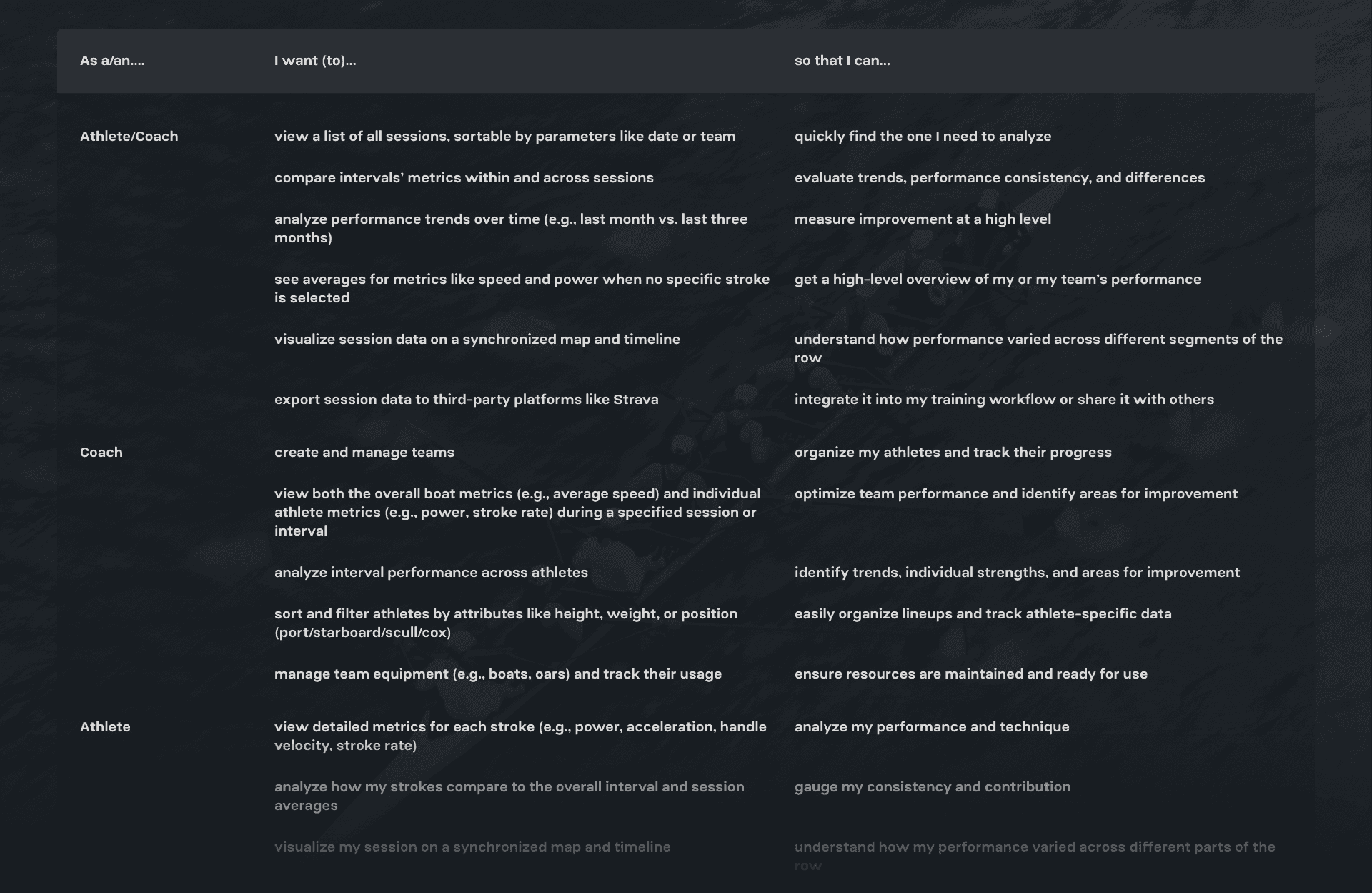
Through this collaboration, we mapped out the user journeys for our two distinct groups: Individual Rowers and Coaches. While their goals overlapped (tracking progress), their workflows were distinct. This definition phase was crucial for determining the information architecture (shown below).
Design System
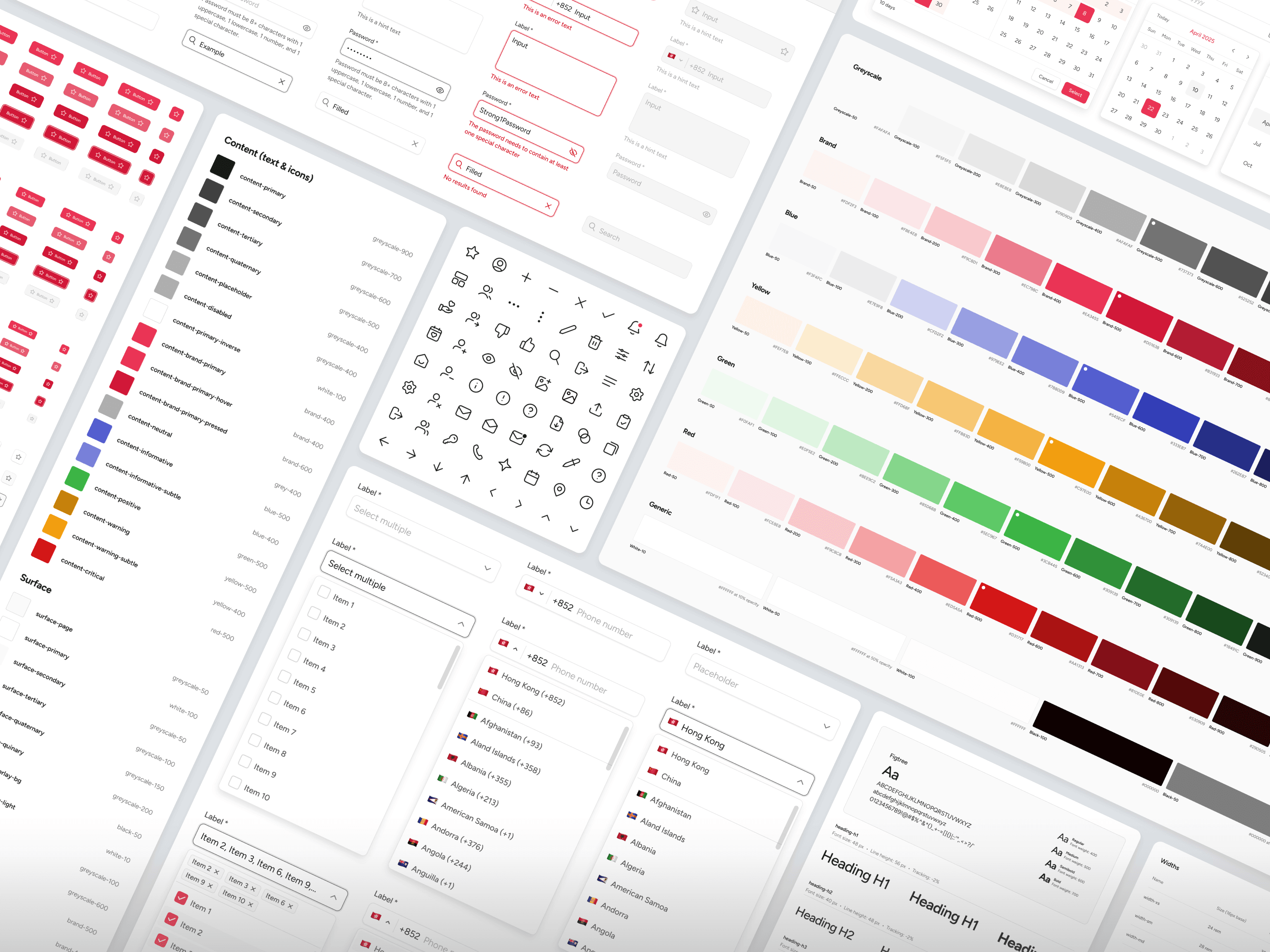
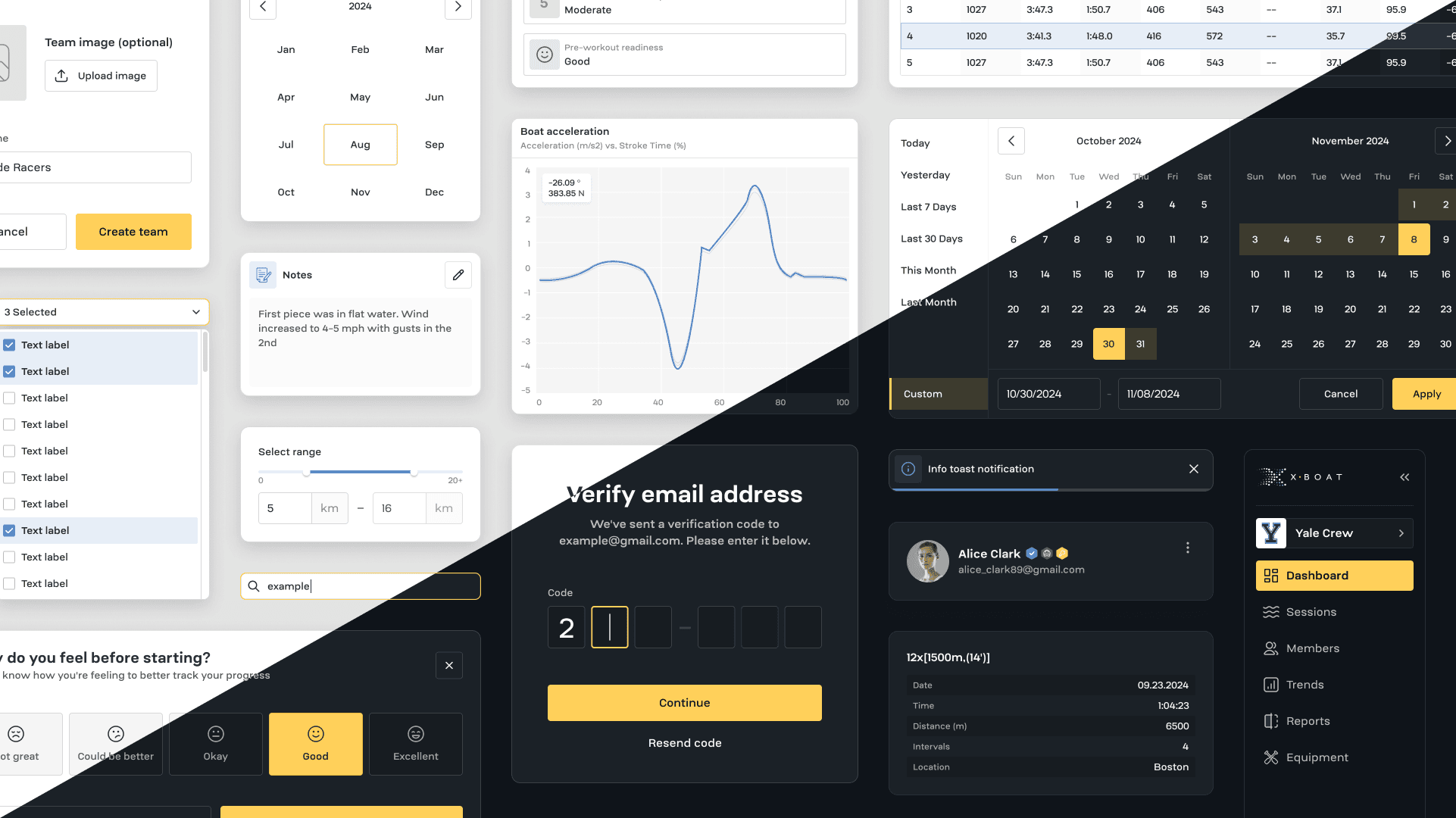
The initial prototype lacked consistency, leading to significant engineering debt. I established a multi-brand, multi-mode Design System using Figma variables and semantic tokens.
Impact on Velocity:
Automated Theming: By implementing semantic tokens for Light/Dark mode, I eliminated manual recoloring, reducing design iteration time by ~40%.
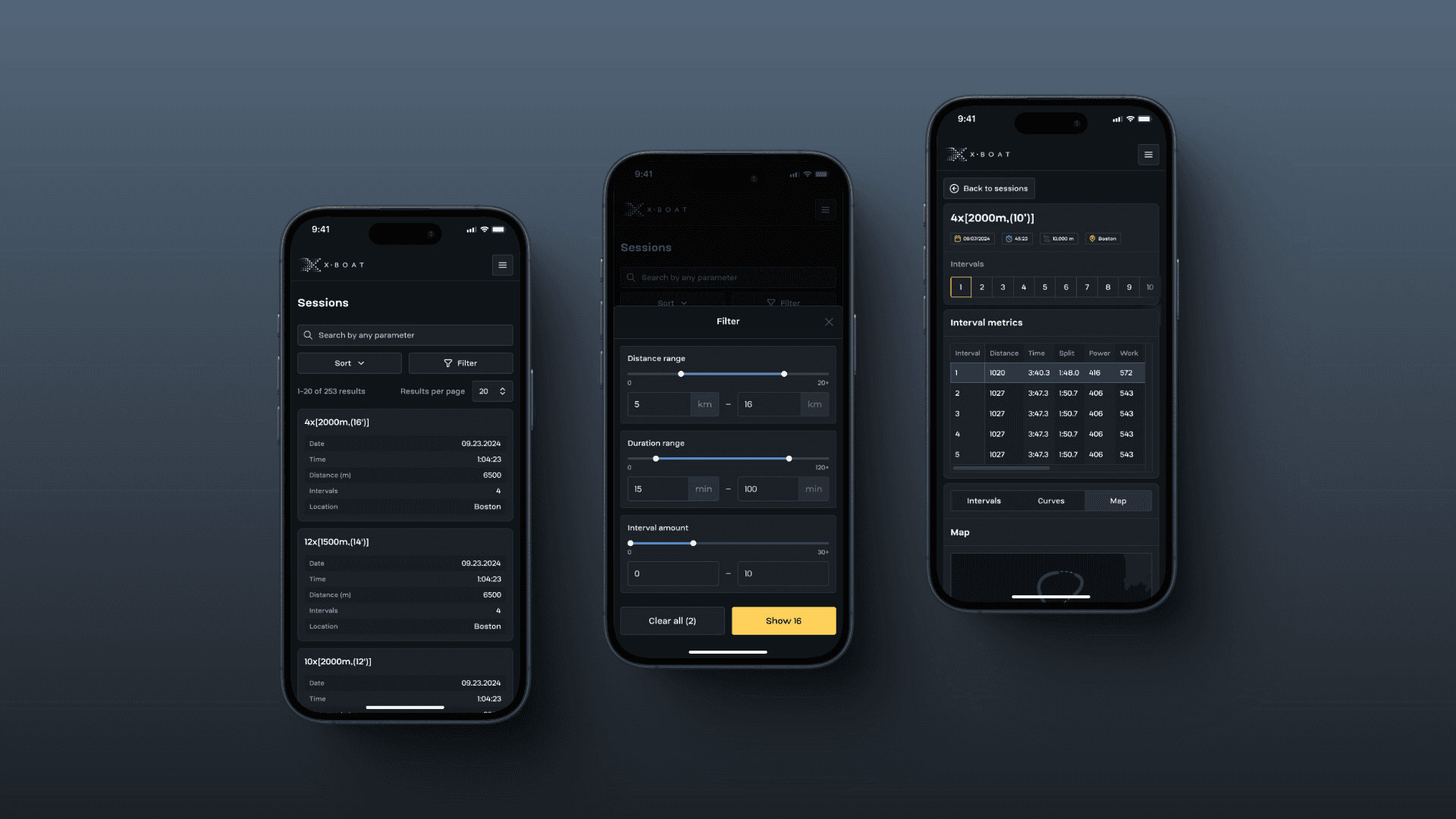
Scalability: The atomic structure allowed us to rapidly deploy the mobile companion app using the same core foundations, ensuring visual parity across web and mobile with minimal dev effort.
Solution
For the MVP, we avoided feature bloat by focusing strictly on the "Session Analysis" loop: the critical moment where athletes and coaches capture and review performance. We prioritized three strategic areas:
1. The core experience: session snalysis
Rowing data is multidimensional: speed, power, and stroke rate all happen simultaneously. The challenge was preventing cognitive overload.
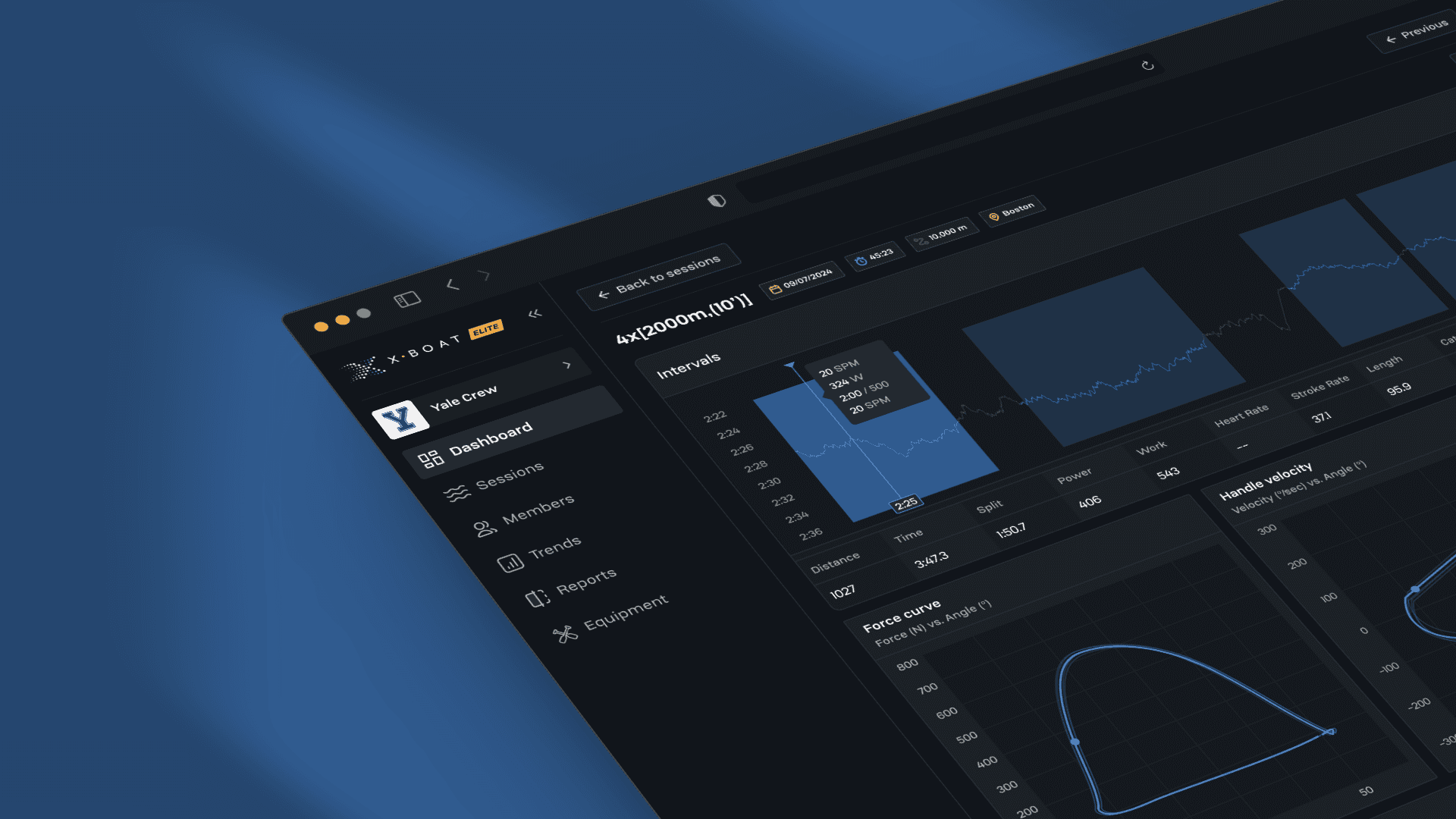
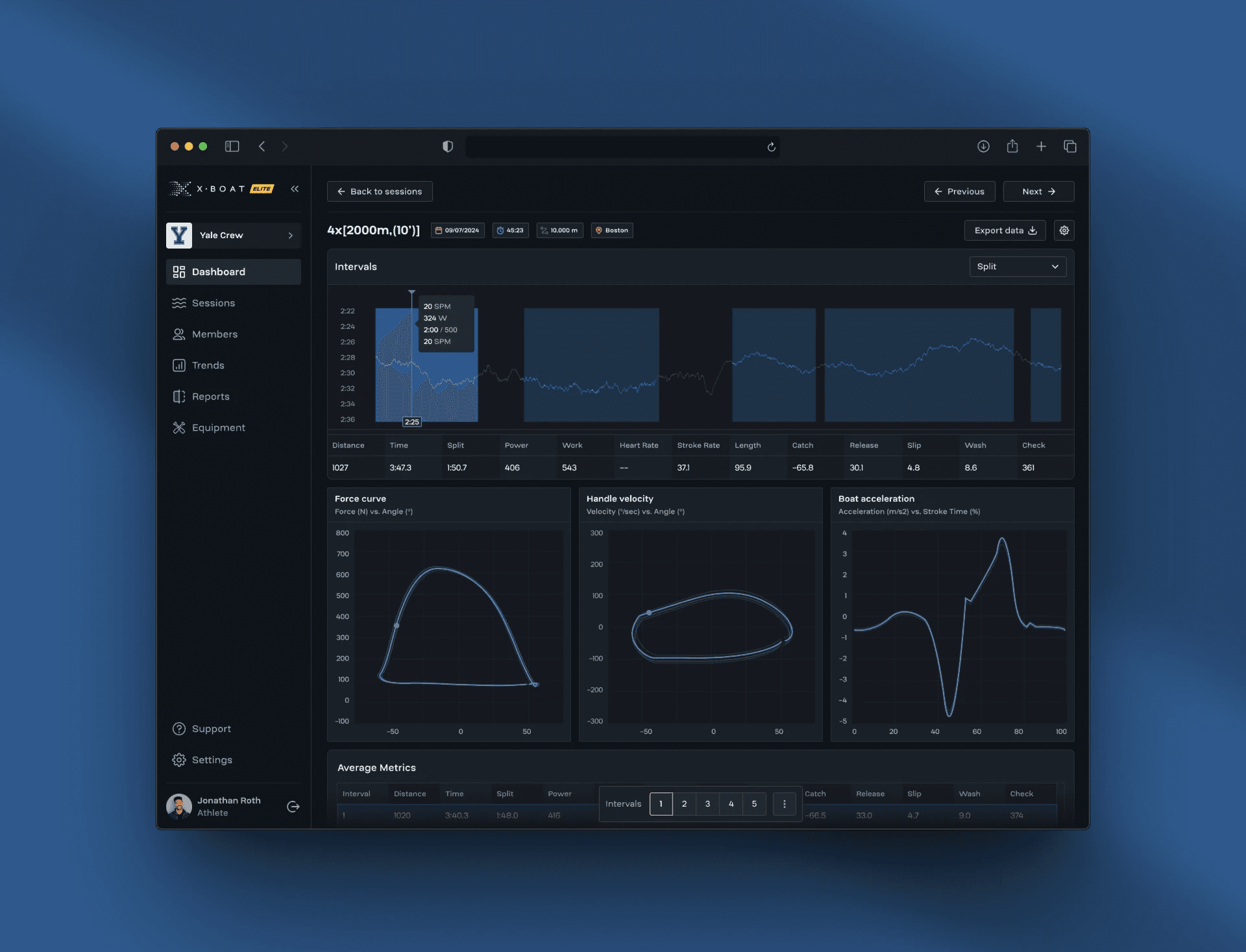
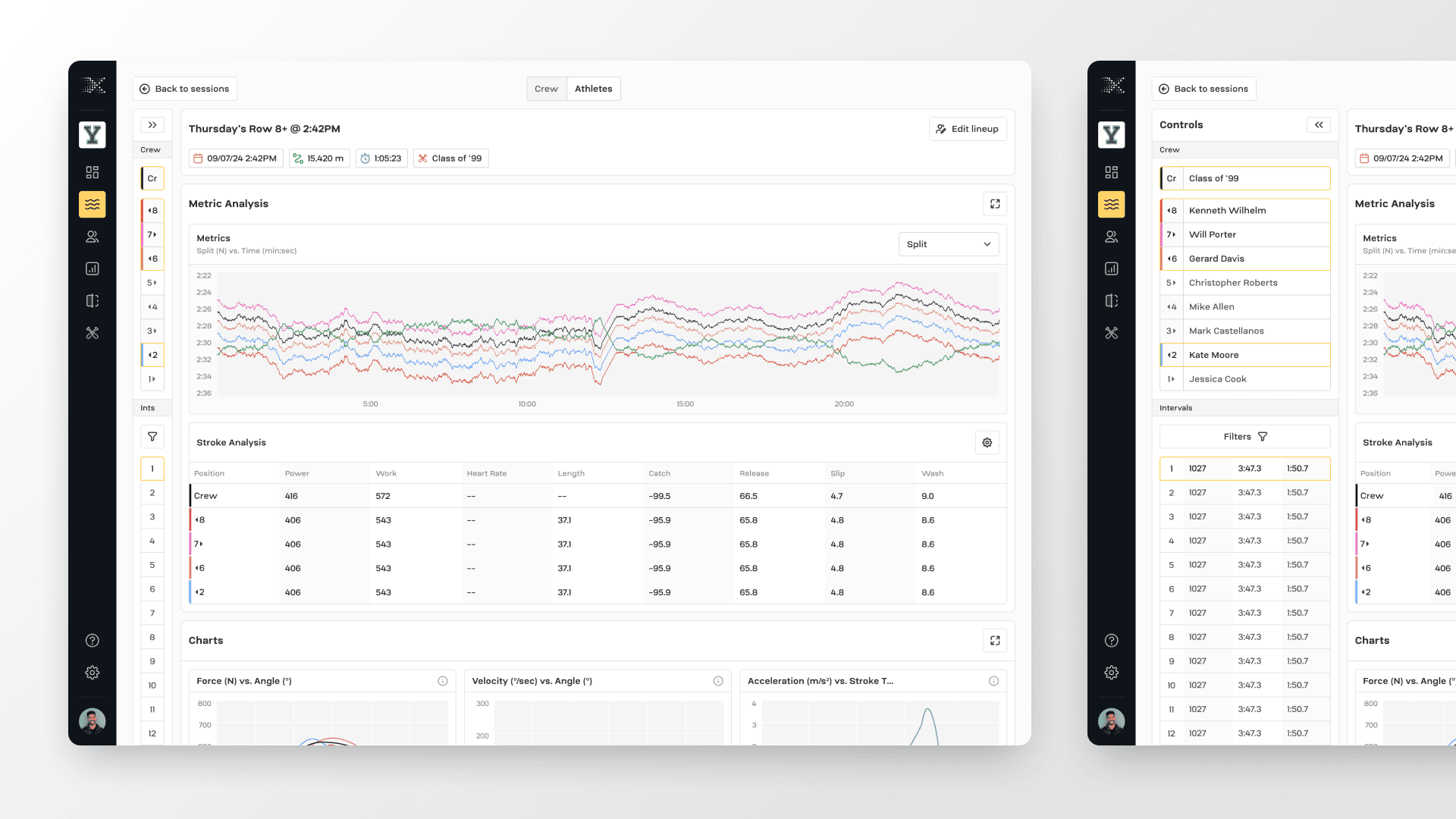
To solve this, I designed a fully synchronized viewport. Users can scrub through a specific chart or select an interval, and the interface instantly updates the data cursor across all other charts and metrics. This allows an athlete to pinpoint a specific millisecond of a workout and see exactly how a spike in stroke rate influenced their power output, without manually cross-referencing separate tables.
Designing for multi-layered access: we identified that Coaches and Athletes don't have conflicting needs, but rather nested needs.
The Athlete needs a deep dive into their specific biometrics.
The Coach needs that same deep dive, but their primary entry point must be the 'Boat Health' (Macro view).
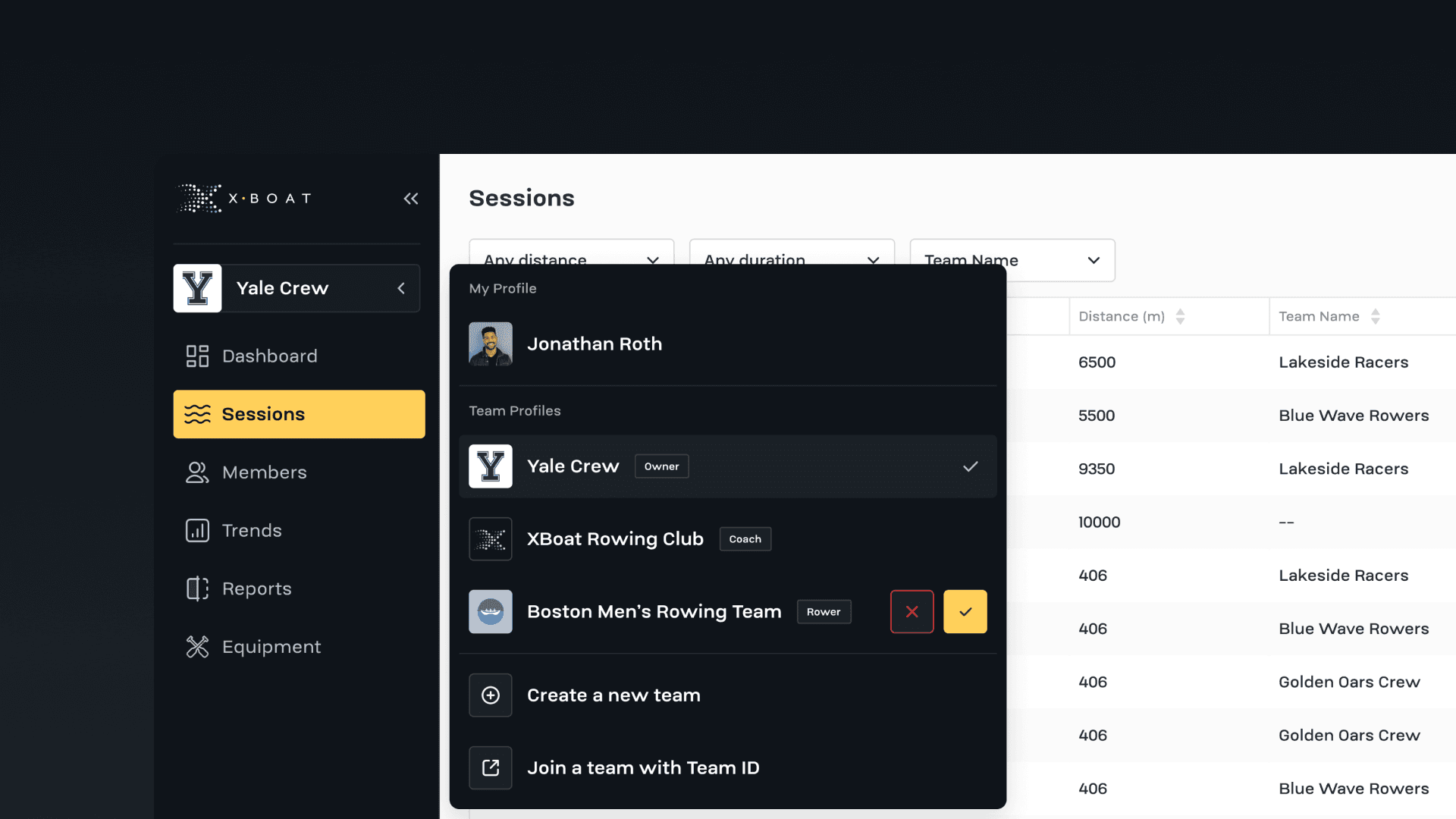
I designed the architecture to prioritize the Crew View for coaches, allowing them to monitor the whole boat at a glance, while building a seamless 'drill-down' interaction to access individual athlete data. This ensures coaches can switch contexts rapidly (Macro to Micro) without navigating away from their session dashboard.
3. The foundation & scalability
Beyond the core analytics, I designed the platform’s essential infrastructure: authentication, account management, and settings as part of a modular design system. This ensures the product feels trustworthy from day one and allows us to scale easily.
We also introduced the Trends Engine, currently in its MVP state. This lays the groundwork for the product's long-term vision: evolving from a session viewer into a comprehensive longitudinal analytics hub.
Outcomes
Market Validation: Following the redesign and V1 launch, XBoat secured an official partnership with USRowing in Oct 2025, validating the platform at the highest level of the sport.
The new component architecture has successfully laid the foundation for the upcoming rollout of paid tiers. We are currently implementing subscription models using the existing design system without the need for a UI refactor.
Beyond the application, I acted as the brand steward for the entire XBoat ecosystem. I designed and developed the marketing website, created investor decks, and even partook in designing the official team uniforms, ensuring a consistent, premium experience across every physical and digital touchpoint of the brand.