Gamifying a membership platform for increased event attendance
Transforming a manual, high-friction event system into an inclusive, gamified digital platform designed to boost engagement and celebrate every member.
Client
Love21 Foundation
Year
2024-2025 (Ongoing)
Scope
Challenge
The friction: high barriers to participation.
Love21 supports the Down syndrome and autism community, but their manual event system (newsletters and phone calls) was creating a bottleneck. It forced staff to act as manual operators and created anxiety for members who feared missing out.
Love21 Foundation's traditional event management system created multiple friction points:
Members learned about events through monthly newsletters, often missing time-sensitive updates
Registration required phone calls during office hours, challenging for working caretakers
No visibility into event capacity or waitlists until calling
Staff manually tracked attendance without insights into patterns
No system to recognize and celebrate member achievements
The foundation needed a digital solution that would not only streamline operations but also motivate consistent participation while respecting the diverse cognitive abilities of their community.
Our approach & the users
Due to the project's timeline and the sensitive nature of the community, our initial research was conducted in close partnership with the Love21 team. Their years of hands-on experience made them invaluable expert proxies, providing deep insights into the needs and behaviors of their members.
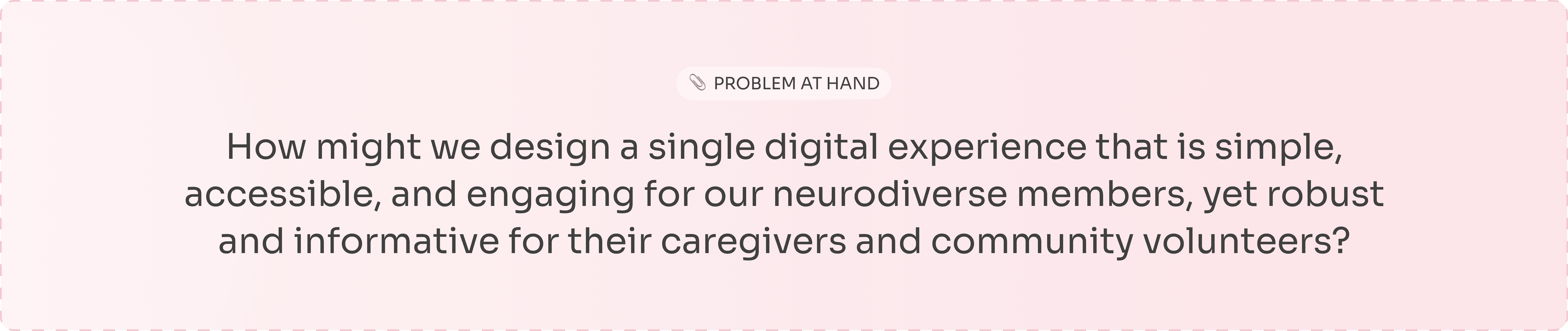
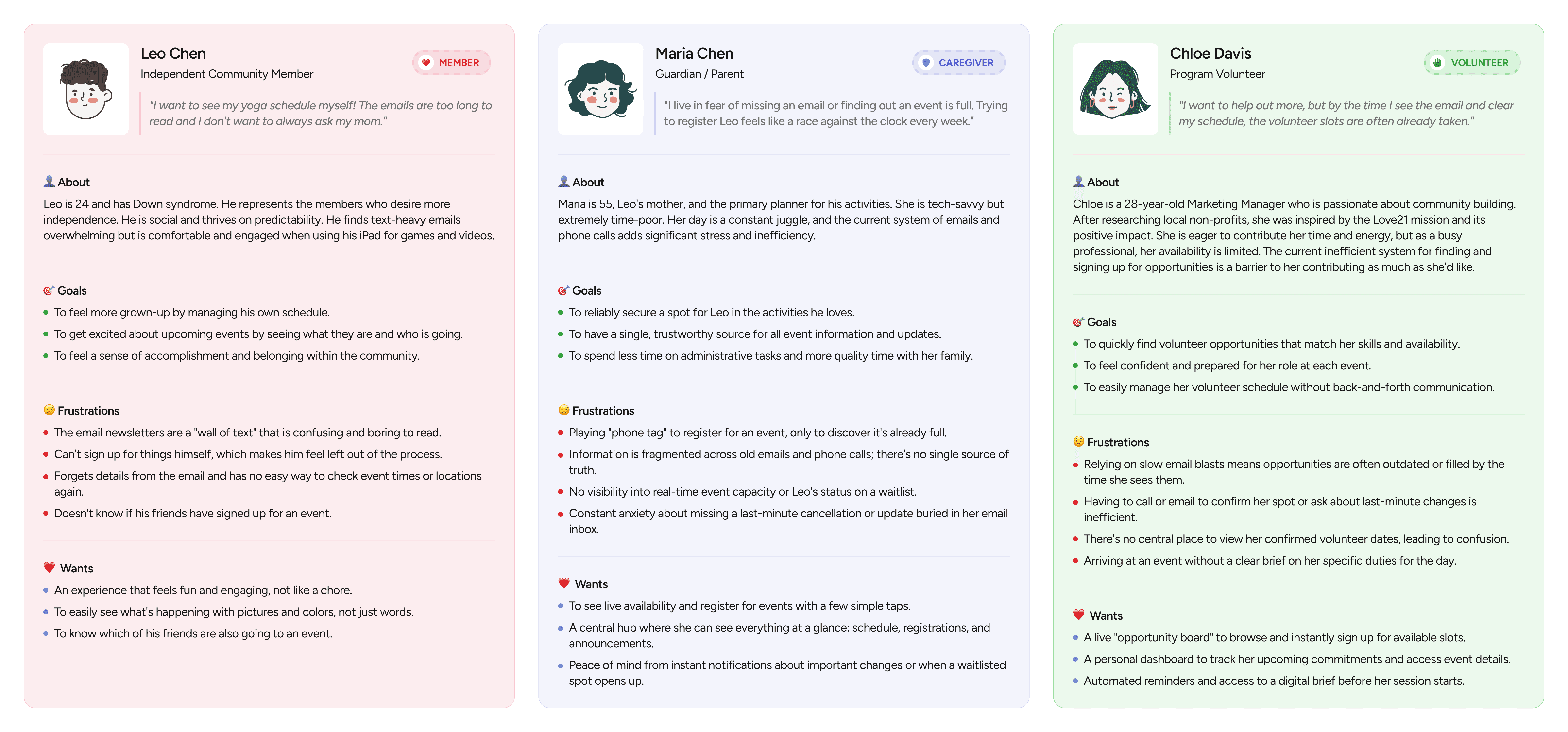
Through workshops with the project manager and Love21's experts, we synthesized this knowledge into three distinct user personas that would guide every design decision. The primary challenge was designing a single, cohesive platform that would serve the unique needs of each group:
Defining success
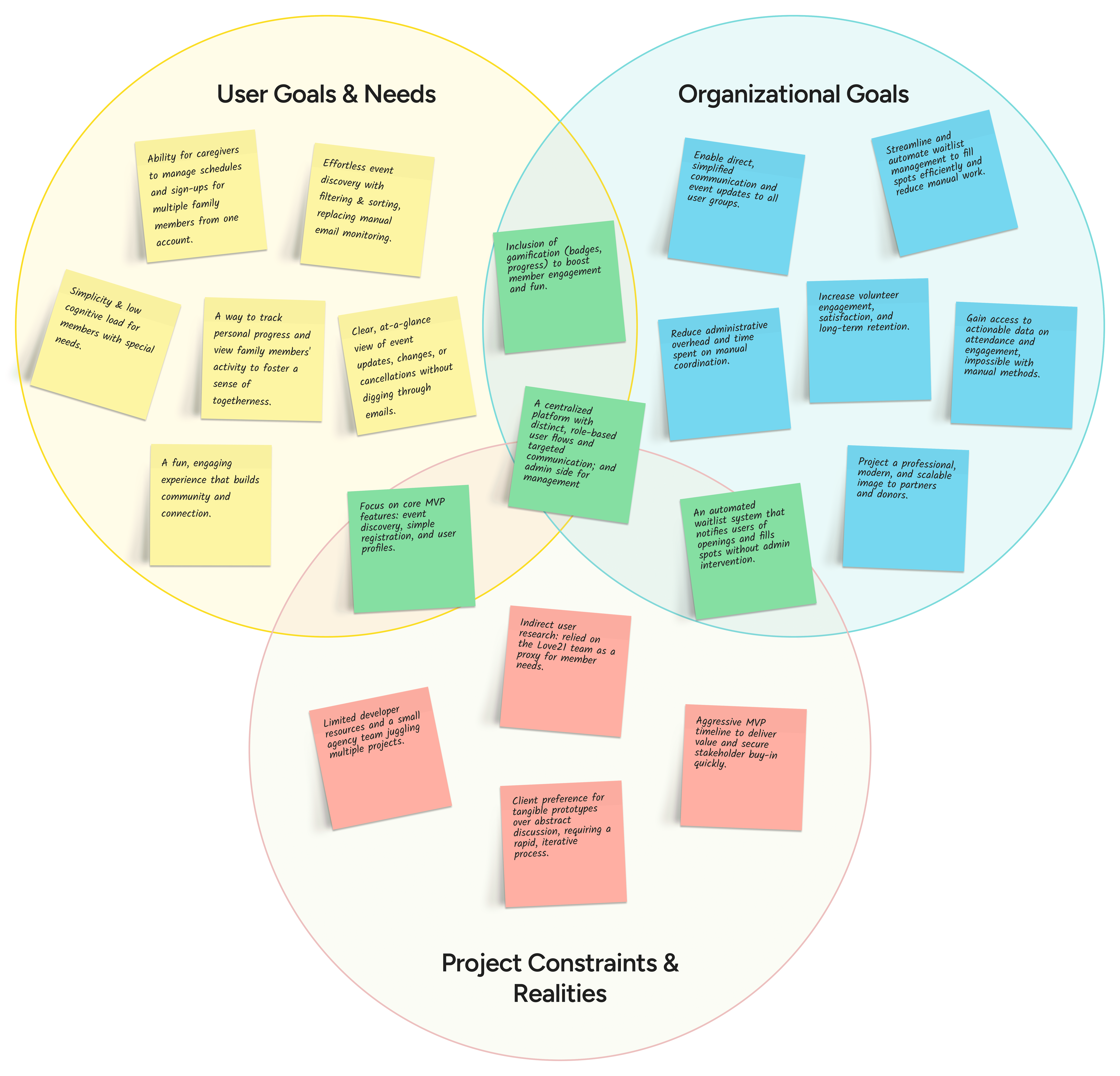
With a clear understanding of our users, we defined the core goals for the project.
The solution needed to exist at the intersection of our members' desires for connection and achievement, and the foundation's need for operational efficiency and increased participation. At the same time, we had to balance the deliverables to be delivered in a rapid timeline with several defined sprints. We started with the foundations like event registration, and added more complex gamification and progress tracking features as we went on.
The solution: a unified, gamified platform
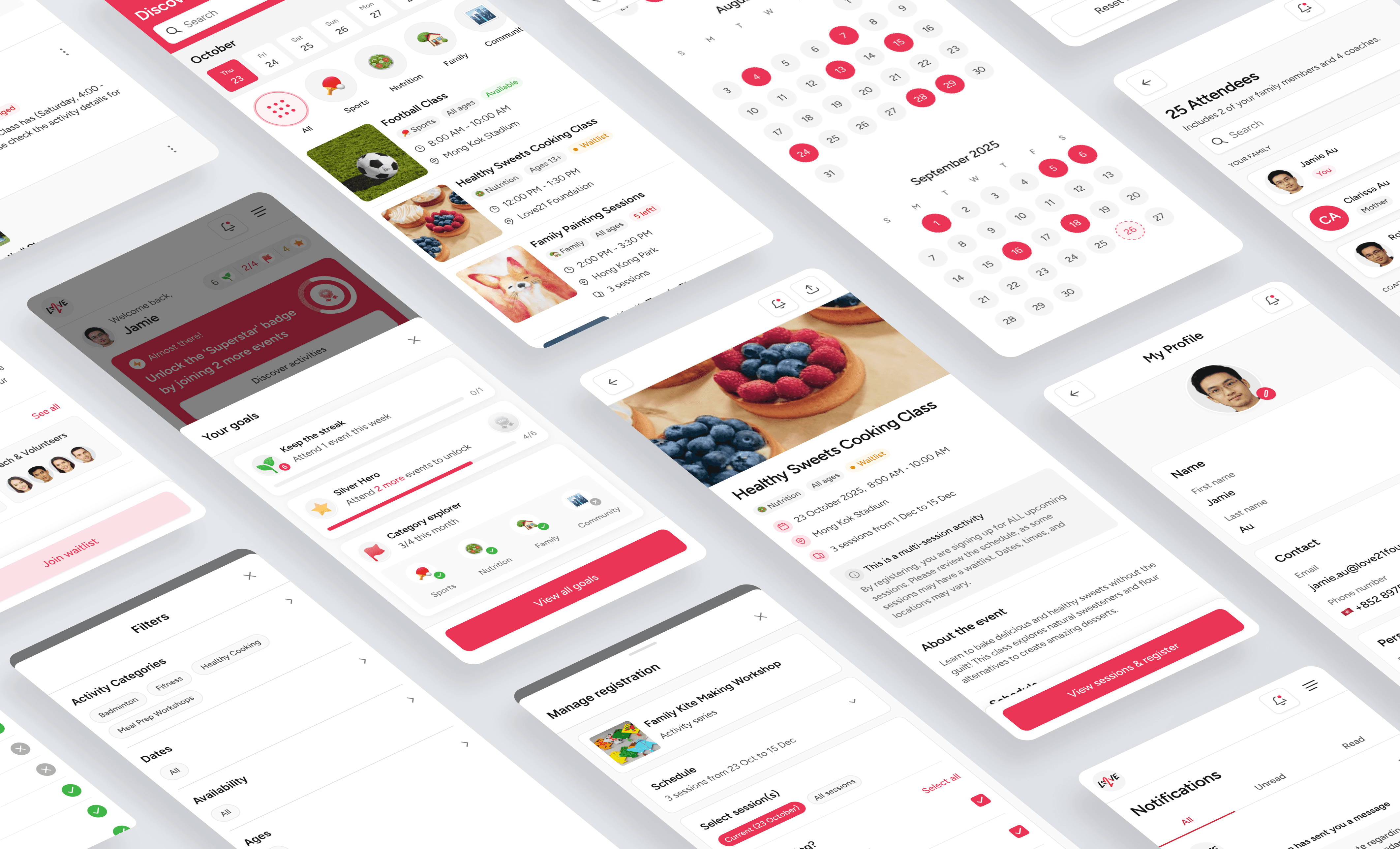
My team and I developed a web application that serves as a central hub for the Love21 community. It replaces the fragmented newsletter and phone call system with a single, accessible platform. The design is centered around three key experiences: seamless event discovery, clear progress tracking, and celebratory milestone achievements..
Simplifying complexity for every persona
The core technical complexities were:
Architecting for multi-tenancy
The complexity wasn't just visual; it was logic-based. We had to serve three distinct personas (Member, Caregiver, Volunteer) with overlapping but distinct permissions.The "Master Page" strategy:
To prevent scope creep and ensure dev parity, I avoided designing unique screens for every state. Instead, I architected a "Master Page" component strategy.Single Source of truth: I mapped a detailed User Flow Matrix where every screen tied back to a master component.
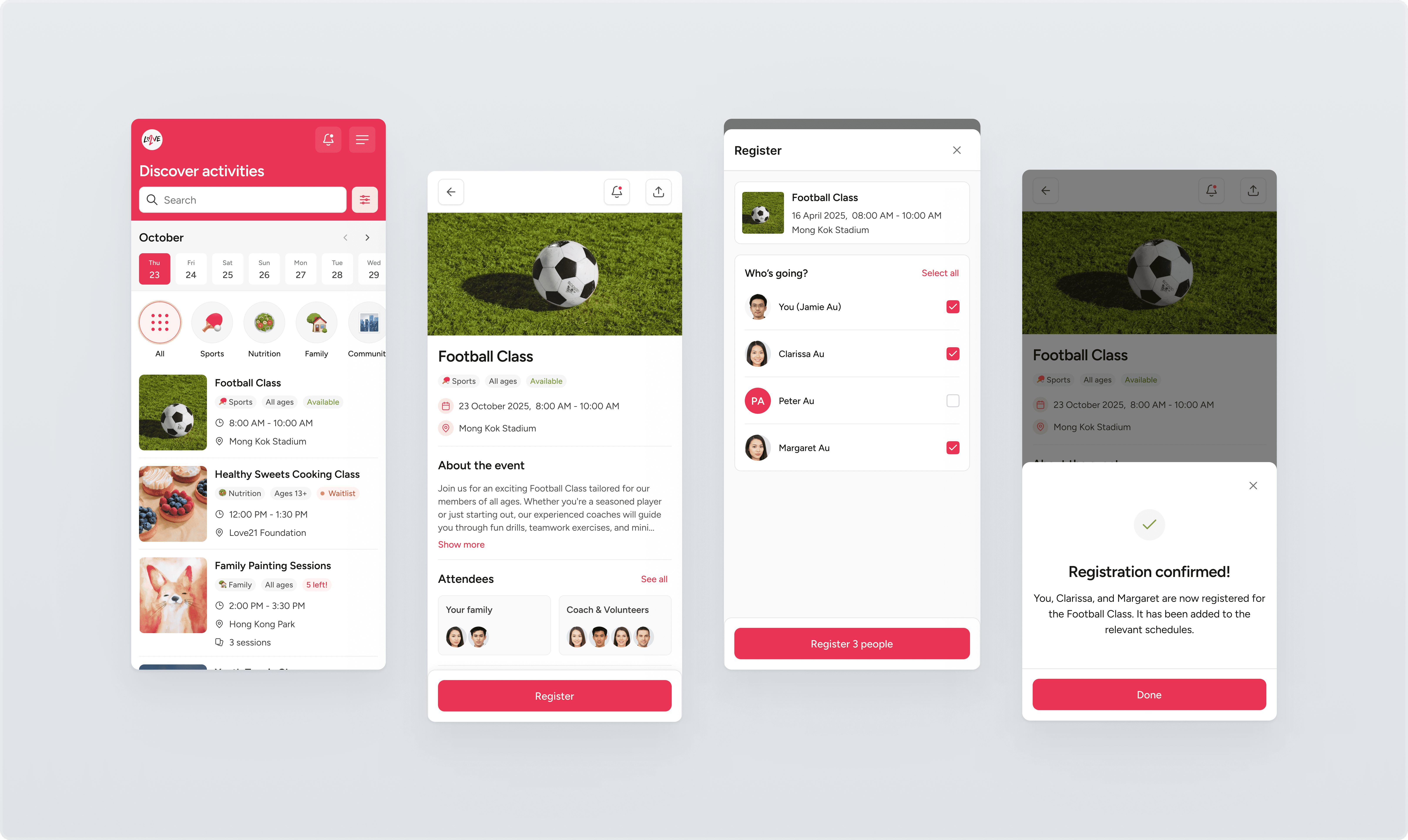
Logic over layout: This allowed us to handle complex logic (e.g., a user being "confirmed" for one event but "waitlisted" for another) without rebuilding the UI, ensuring the change propagated correctly across all flows.

Gamification as cognitive support
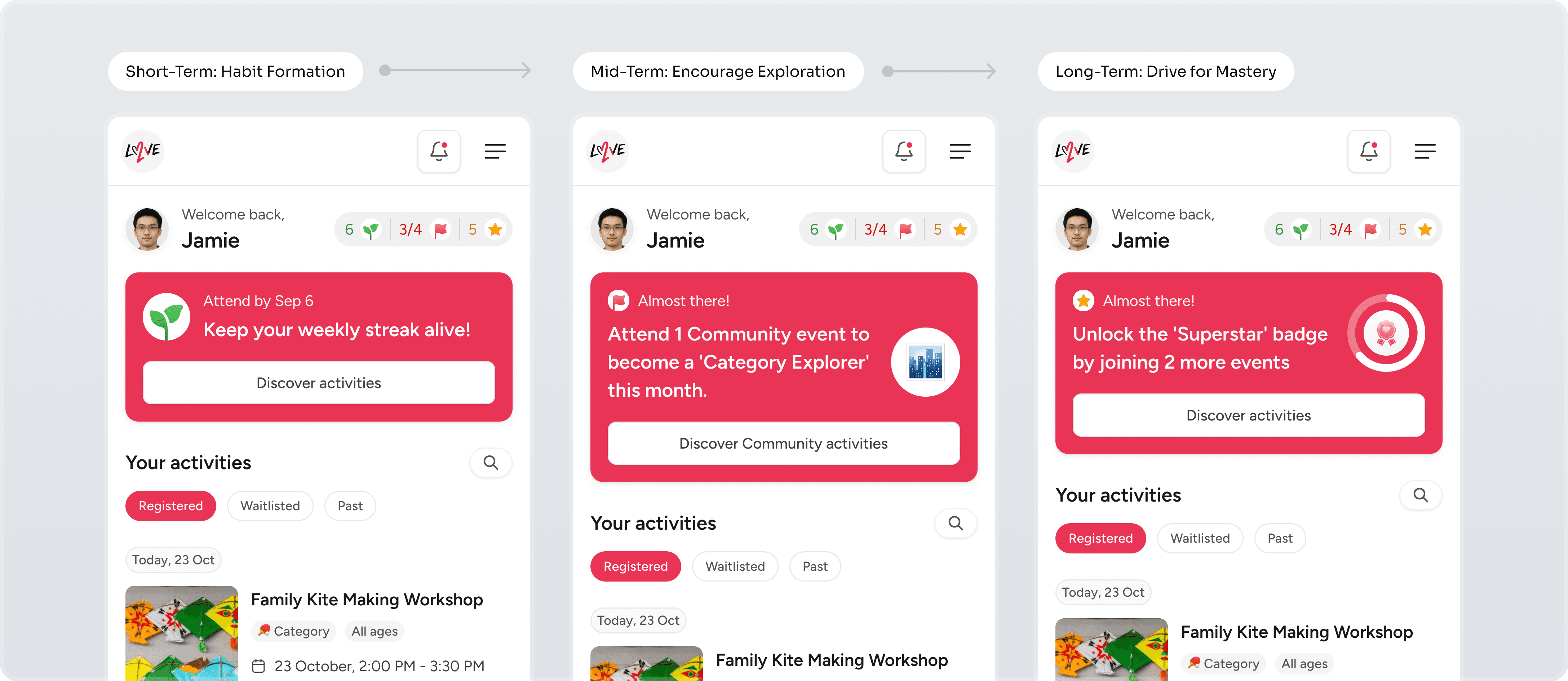
For our neurodiverse members, routine and predictability are vital. We utilized gamification not just for "delight," but to provide clear, tangible feedback loops that support habit formation.
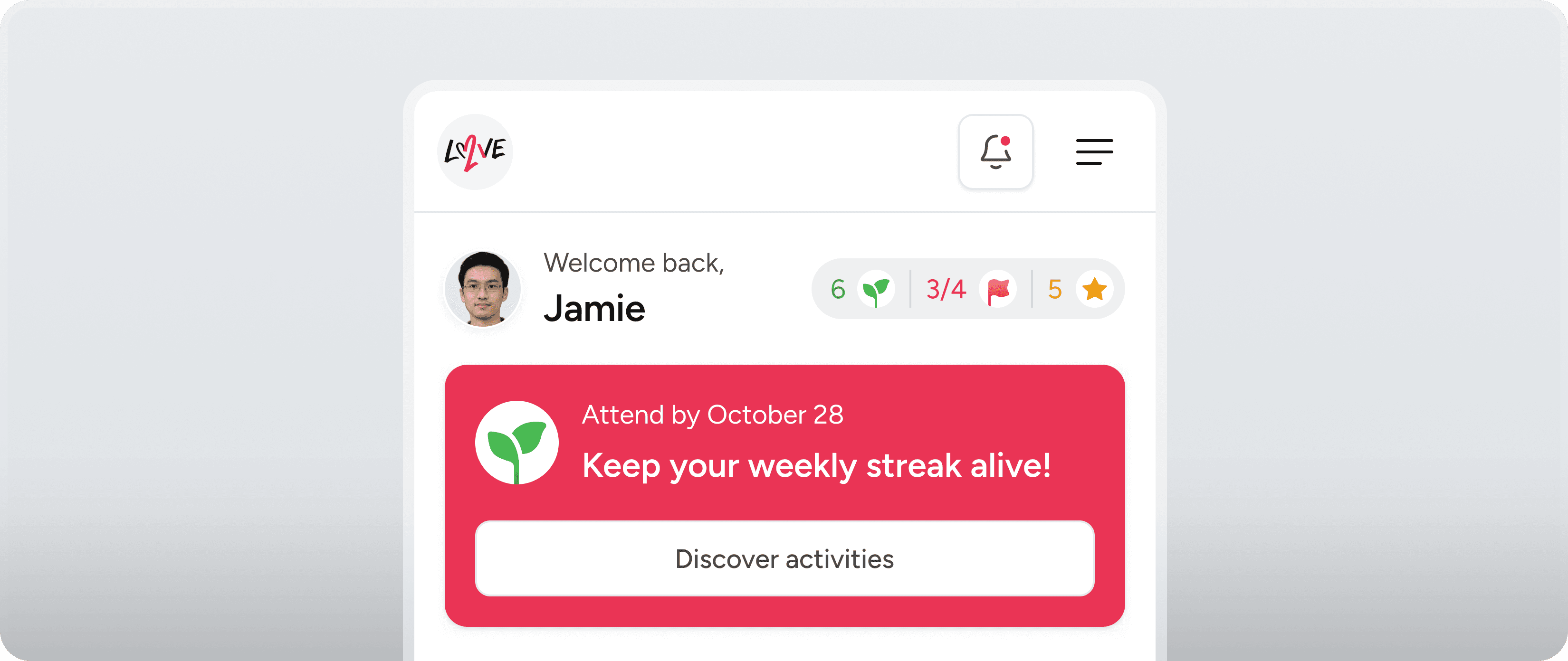
Context-aware motivation: smart banners replace static notifications, guiding the user from simple habit formation to long-term mastery.
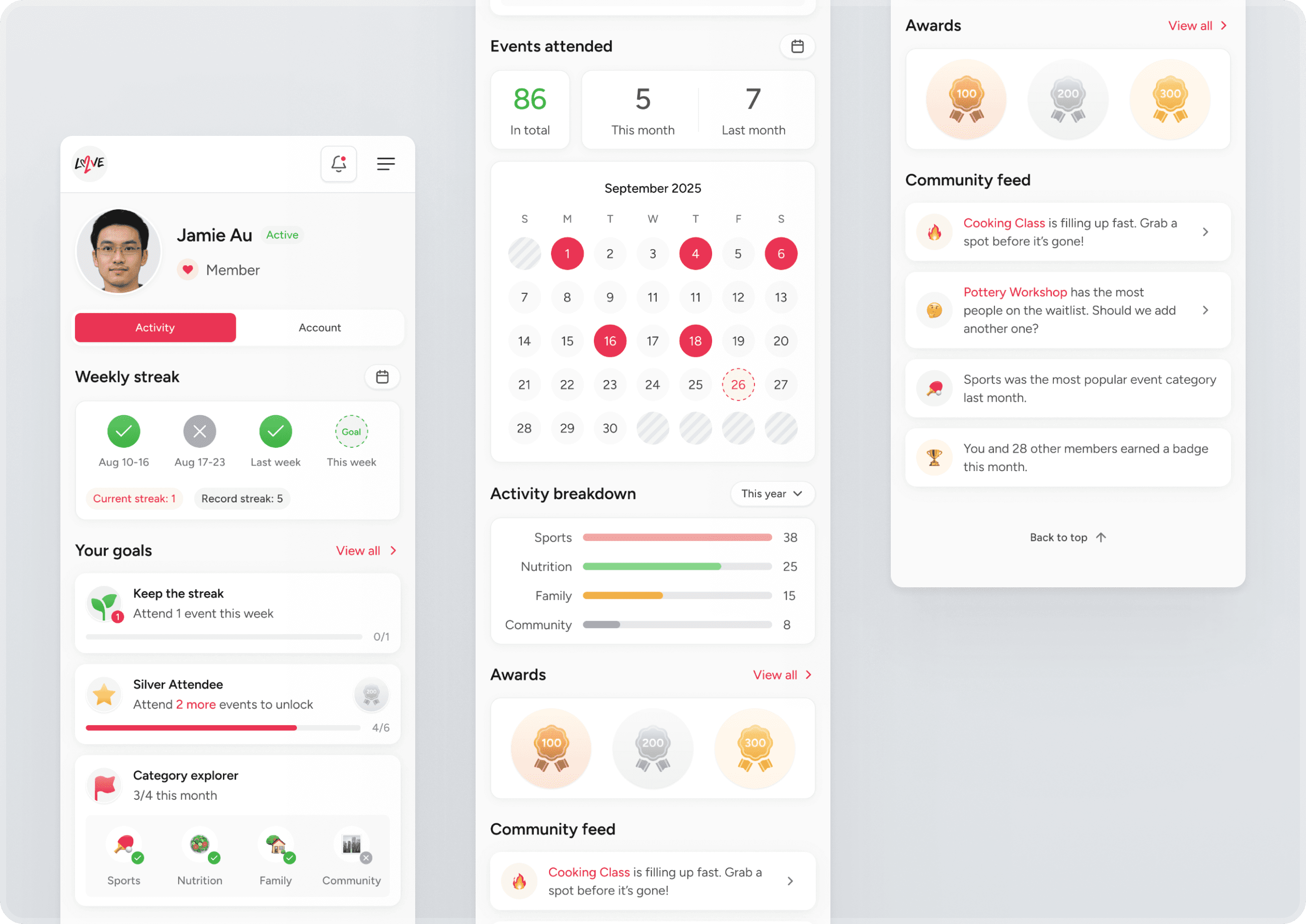
Tangible progress: The profile acts as a "trophy room," visualizing abstract concepts (attendance history) into concrete visual rewards (badges and streaks), making the value of participation immediately visible.
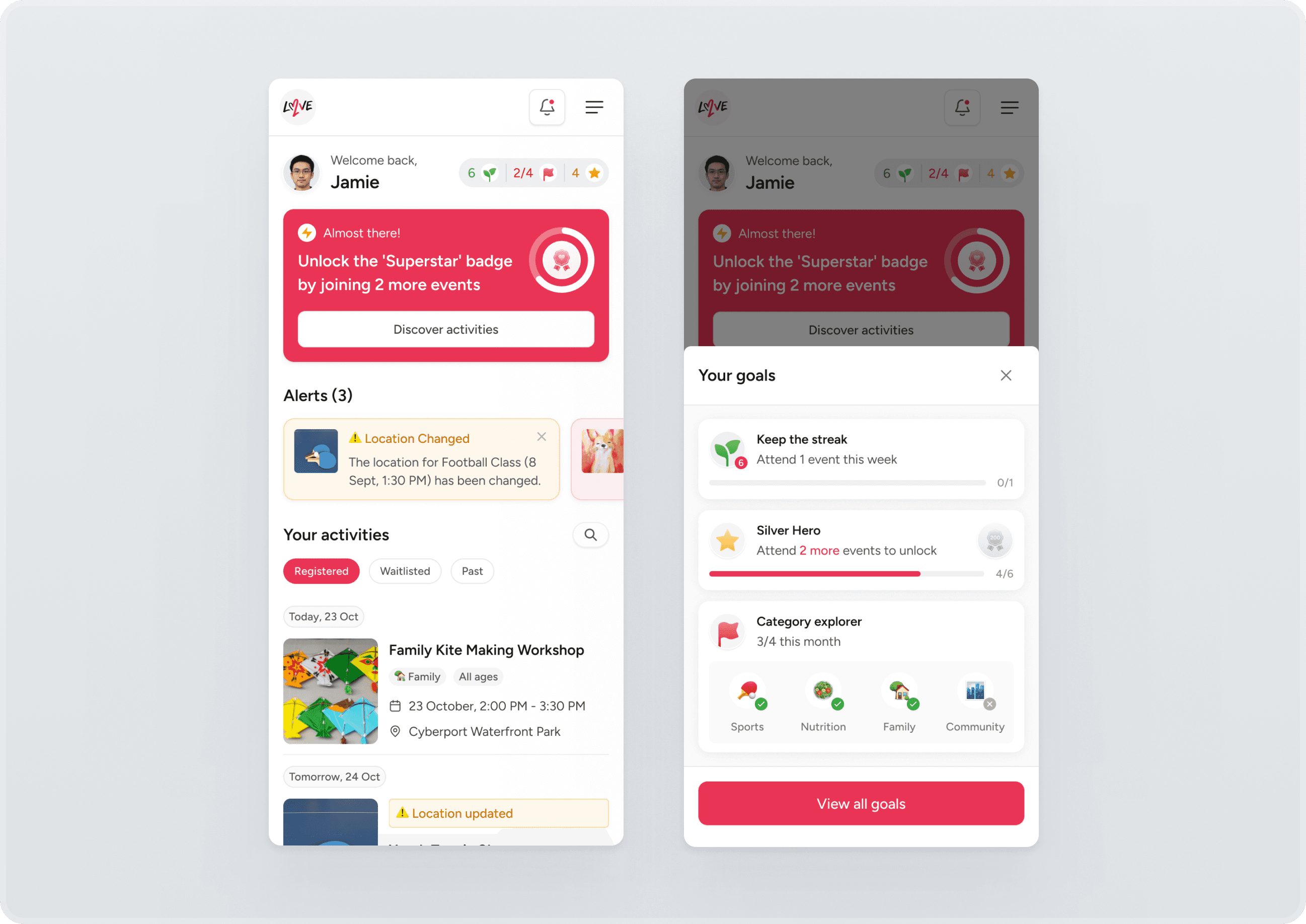
Constant & accessible motivation: Key goals and progress toward badges are surfaced directly on the user's home screen. This provides constant, low-effort visibility into their achievements and next steps, keeping motivation high without requiring them to dig through profile pages.
These make the progress feel tangible and celebrates every single step of the member's journey.
Design system
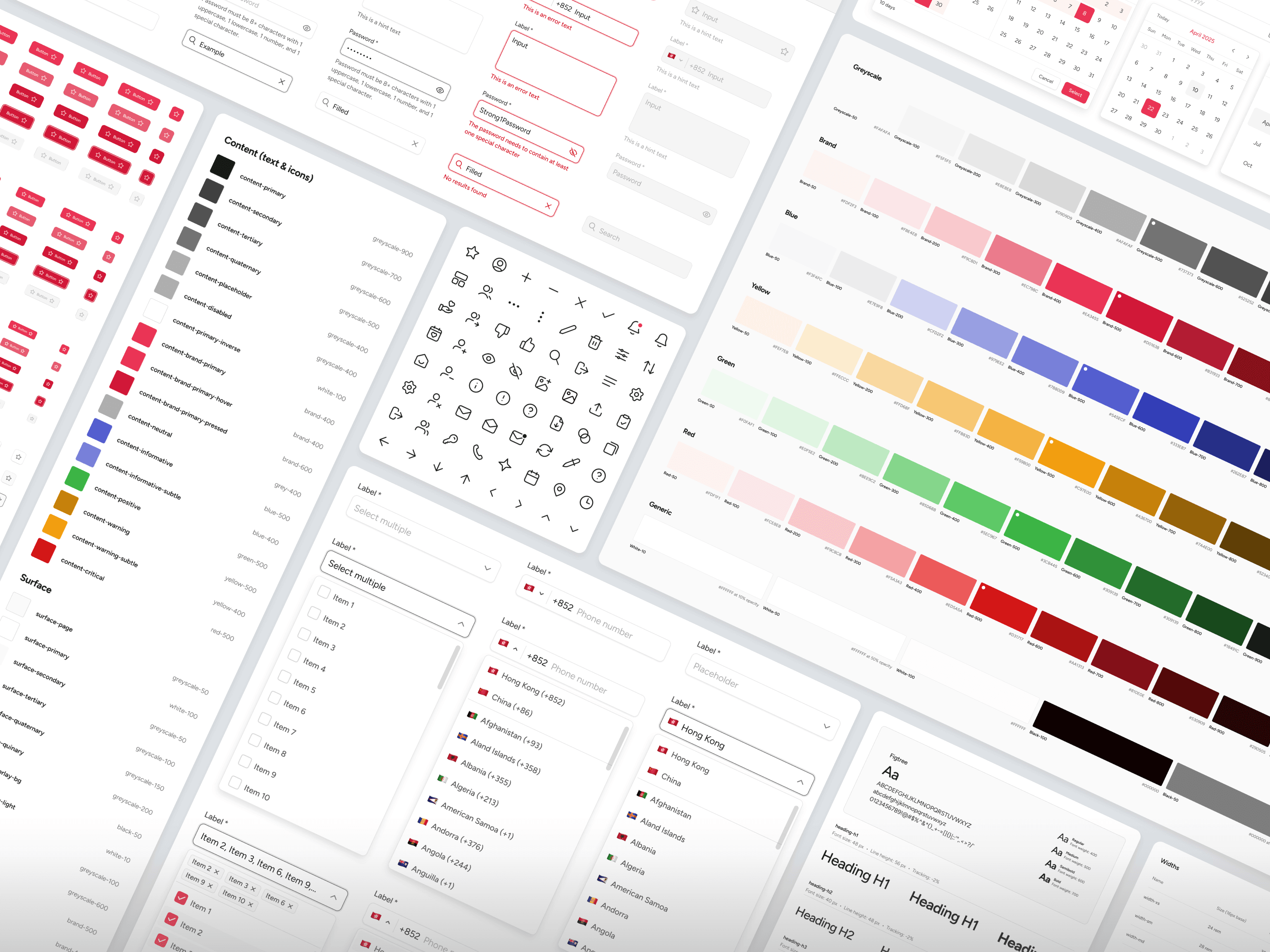
To ensure a consistent and accessible experience, this project was built upon my Universal Design System. This provided a robust foundation for typography, colors, and basic interactive components.
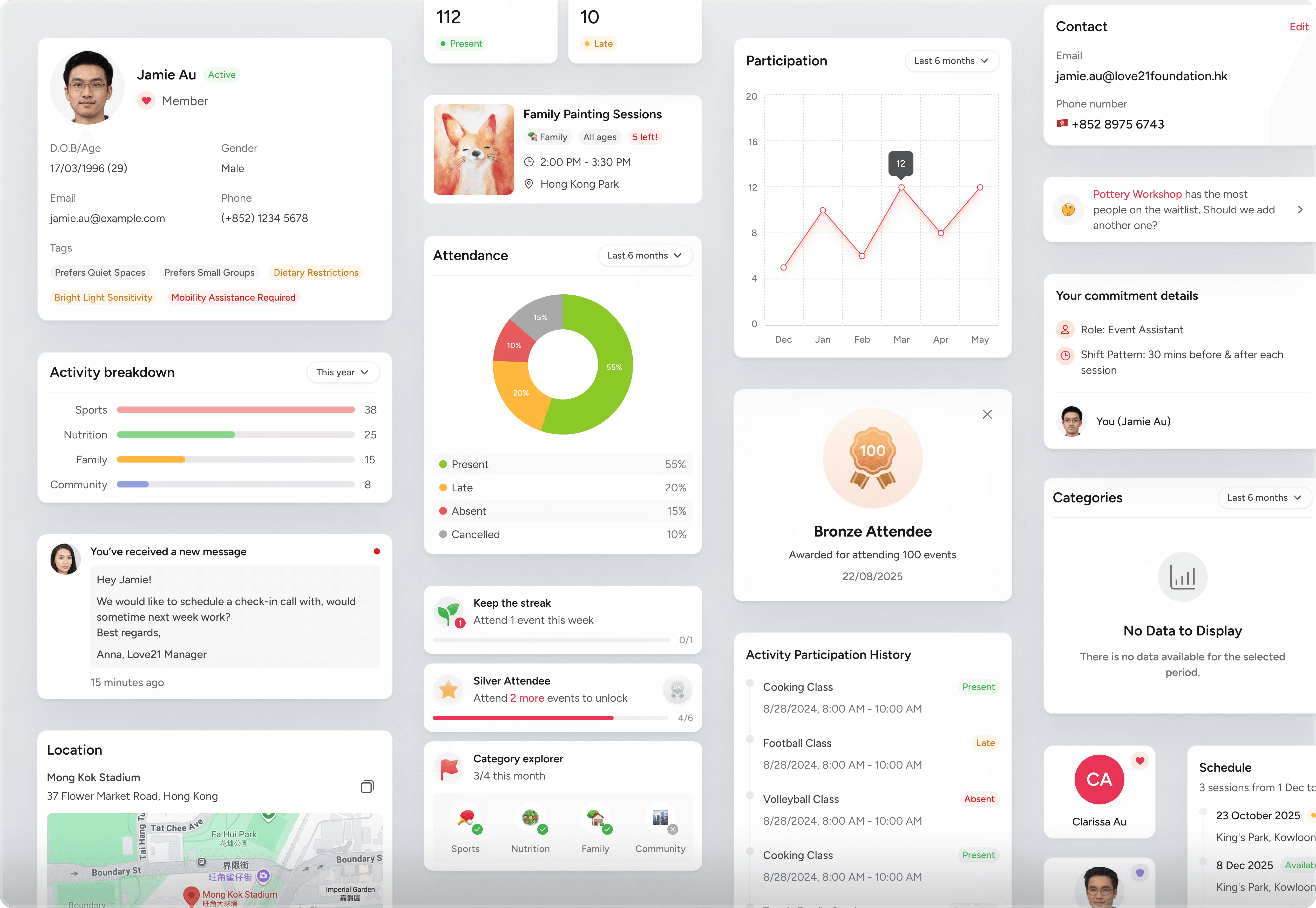
To meet the app's unique requirements, I then designed and documented a suite of custom components, particularly project-specific cards, varying from data visualizations to gamification elements, extending the system while maintaining its core principles.
Impact & next steps
The app is currently in the development and testing phase, but it’s already demonstrating its value. Even in these early stages, the structured approach and clear designs have transformed the project's trajectory, with positive feedback from the Love21 team.
Some early wins:
Accelerated decision making: The user flow matrix and high-fidelity prototypes eliminated ambiguity, getting the client, project management, and development on the same page.
Reduced development costs: Component-based designs act as a single source of truth, allowing developers to build faster and with fewer questions.
Enthusiastic early feedback: Initial walkthroughs with the Love21 team have been met with excitement, particularly around the clarity of the registration flow and the motivational pull of the profile dashboard.
Next steps:
Formal usability testing: We are currently in the process of conducting structured testing sessions with members, caregivers, and volunteers to validate our core assumptions. Key areas to test are the mixed-status registration flow and the appeal of the gamification features.
Iterate based on fFeedback: The insights gathered will directly inform the first round of post-launch iterations and refinements.
Define & track KPIs: Post-launch, we will measure success by tracking key metrics like weekly active users, streak retention, and the number of badges earned.
Designing for a neurodiverse community required a shift from "ease of use" to "clarity of intent." It taught me that the best digital experiences don't just reduce friction; they instill confidence. By balancing the strict technical constraints of an NGO with a deep empathy for the end-user, we’ve built a foundation that doesn't just manage events, it celebrates the people attending them.